




News
Wholesale Handbags That Sell at Your Retail Store
Wholesale Handbags That Sell at Your Retail Store
A handbag can look great in a product photo and still sit too long on the shelf. The wholesale handbags that move are the ones that match your customer, your price point, and the way your store sells. For boutiques, online sellers, market vendors, and gift shops, buying decisions should start with sell-through potential, not just a low unit cost.
A strong accessories assortment gives customers choices without tying up your cash in too many similar styles. The goal is simple: buy commercially relevant bags at a price that leaves room for a healthy retail markup, then refresh the assortment before it feels stale.
Start With the Retail Price, Then Buy Wholesale Handbags
Before placing a wholesale order, decide where each style belongs on your retail floor or online storefront. A crossbody intended for an attainable impulse purchase should have a different cost target than a larger handbag set positioned as a gift item. Working backward from the retail price helps protect your margin from the beginning.
Start with the retail price your shoppers will realistically pay, then account for your desired gross margin, shipping, packaging, marketplace fees if applicable, and sales promotions. The remaining amount is your target landed cost. A bag with a very low wholesale price is not automatically a better buy if shipping, slow movement, or discounting cuts into the profit.
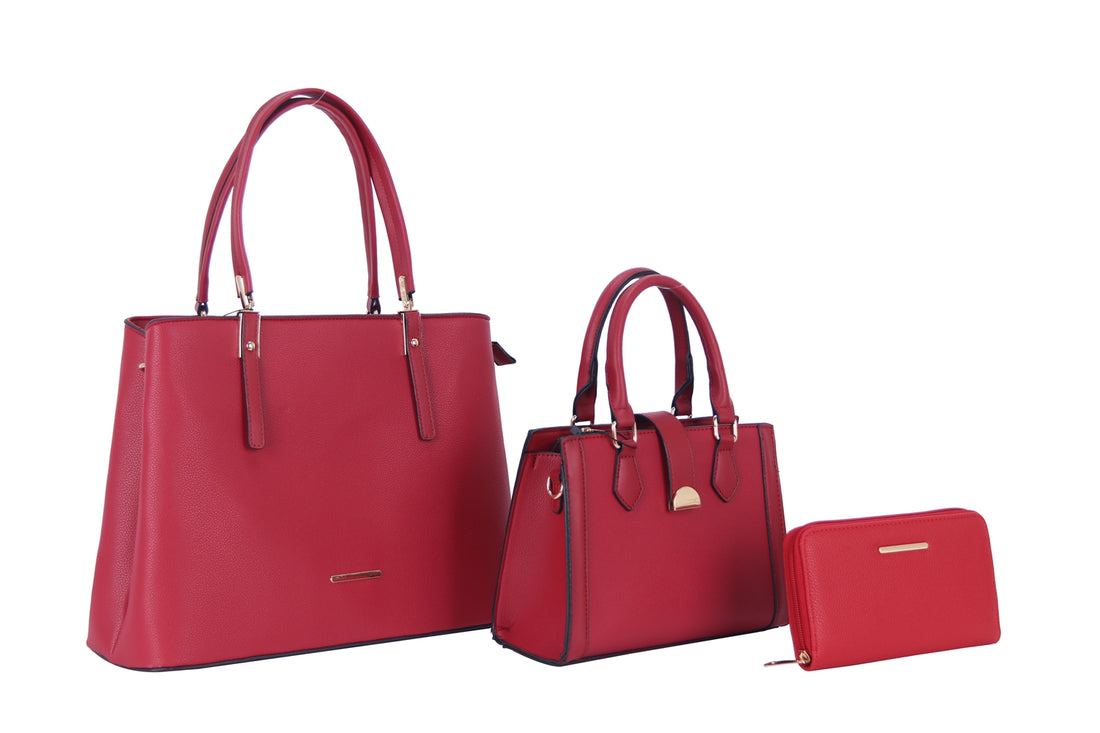
This is also where product type matters. Handbag sets can support a higher ticket because shoppers see more value in a coordinated look. Crossbody bags often sell well as everyday items because they are easy to carry and easy to gift. Wallets can work as add-on purchases near checkout, while fashion backpacks and school backpacks address a more practical need with seasonal demand.
Price your assortment in clear tiers. A retailer may carry entry-level bags for quick purchases, mid-range pieces for repeat shoppers, and a few higher-priced sets for customers buying gifts or complete looks. Not every category needs every price point. It depends on your customer base, local competition, and how your store is positioned.
Build an Assortment, Not a Pile of Random Styles
Buying one of every style may feel safe, but it can create a confusing display and make replenishment difficult. Buying too deeply into one trend can create the opposite problem: too much inventory if customers move on quickly. The practical middle ground is a focused mix of proven categories and a smaller number of trend-driven styles.
For most independent retailers, a balanced handbag order begins with core demand. Neutral colors, everyday crossbodies, roomy tote-style bags, simple wallets, and functional backpacks give customers familiar options. Add color, texture, hardware, prints, or novelty details around that core. Trend styles help your display look current, but basics often pay the bills between trend cycles.
Think about how customers shop your business. A boutique with apparel may need bags that complete outfits, with color and silhouette doing much of the work. A convenience-focused gift shop may do better with easy-to-understand handbags, wallets, and backpack options at accessible prices. An online reseller needs styles that photograph clearly and have obvious selling points in a short product description.
When you buy from a supplier that allows mix-and-match ordering, use that flexibility. Instead of committing to large quantities of one look, build a broader assortment across handbag sets, crossbodies, wallets, and backpacks. This reduces the risk of guessing wrong while giving your customers more reasons to browse.
Use Color With a Sales Plan
Color can increase conversion, but only when it has a place in your assortment. Black, tan, brown, gray, and cream are dependable starting points. Seasonal colors and bright fashion shades can create urgency, especially when displayed with matching apparel or promoted in social content.
Avoid ordering every color in every shape. A better approach is to keep core silhouettes in reliable colors, then test bolder colorways in selected styles. If a color sells out quickly, reorder when available. If it lingers, you have limited exposure and can move it through a promotion without damaging the whole category.
Check Availability Before You Plan a Promotion
A good promotional calendar depends on inventory that can ship. If you plan a weekend market, a live sale, a back-to-school display, or a holiday gift event, verify that the merchandise is ready to ship before you advertise it to customers.
Ready-to-ship inventory matters because small businesses cannot always wait through long production timelines. It allows you to react to seasonal demand, replenish fast sellers, and take advantage of closeout opportunities when the price is right. For retailers across the United States and Canada, warehouse location and shipping timelines can affect when product reaches the sales floor.
New arrivals are useful for keeping regular shoppers interested, but they should not replace your core inventory. Weekly catalog updates give buyers fresh options, yet a disciplined buyer still compares each new item against actual sales data. Ask whether the new style fills a gap, improves on an existing seller, or simply looks different. Different is not always better.
Closeout pricing deserves the same level of review. Closeouts can create excellent margin opportunities, especially for market vendors and promotional events. But a closeout is only valuable if the style, color, and quantity fit your business. Buy it because you can sell it, not because the unit price is hard to ignore.
Buy to Meet Your Minimum Without Overbuying
Wholesale minimums help suppliers serve trade buyers efficiently, and they require retailers to place orders with intention. A $300 minimum is manageable when it is spread across categories that support your sales plan. It becomes risky when the order is padded with unfamiliar styles just to reach the threshold.
Create a simple order worksheet before shopping. Include the SKU or product name, quantity, unit cost, expected retail price, color, category, and the reason you are buying it. That reason might be a proven reorder, a seasonal need, an add-on item, or a controlled trend test. If a product has no clear reason, leave it out.
Keep enough depth in your best categories to make the order worthwhile. For example, if crossbodies are a consistent seller, they may deserve more of the budget than a category you are testing for the first time. A retailer with strong backpack demand during late summer should plan inventory earlier rather than trying to source after school shopping has already started.
SD Designer Handbags supports this kind of practical buying with wholesale-only, mix-and-match ordering and ready-to-ship inventory from Chula Vista, California. Buyers can combine categories instead of being forced into a single style, making it easier to build an order around actual retail demand.
Merchandise the Bags for Faster Sell-Through
Your buying work is only half finished when the cartons arrive. Handbags sell better when customers can understand the value quickly. Remove unnecessary clutter from displays, show key features, and group products in a way that makes shopping easy.
Handbag sets should be displayed as complete gift-ready options. Crossbodies can be arranged by color or size so shoppers can compare them fast. Put wallets near handbags, checkout areas, or gift displays to encourage add-on purchases. Backpacks should be easy to open and inspect, especially when shoppers are checking storage space, straps, and organization.
For online sales, use photos that show scale, strap length, interior details, and texture. Lead with the feature most likely to sell the item: a matching wallet, multiple compartments, hands-free wear, a statement color, or room for daily essentials. Accurate descriptions reduce returns and help customers choose with confidence.
Do not wait months to review performance. Check sales by category, color, price point, and style every few weeks. Mark down slow products before they become old news, and reorder winners while customer interest is still active. A small, timely promotion often protects more margin than a large clearance later.
Keep Reordering Simple
The best wholesale handbag strategy is not based on finding one perfect order. It is a repeatable process: test thoughtfully, watch what sells, replenish proven categories, and use new arrivals to keep your assortment fresh. Your inventory should evolve with your customers, not with guesswork.
A good next order starts on the sales floor. Notice what customers touch, ask about, and buy together. Those signals will tell you far more than a trend forecast when it is time to choose your next assortment.
